Monday, August 15, 2016
Trial of Dolphin Killers to Begin in Peru
For immediate release
Trial of Dolphin Killers To Begin in Peru
St. Augustine, FL August 15, 2016 -- Initial proceedings in the trial of three Peruvian fishermen accused of killing dolphins for use as shark bait will commence August 16 in Lurin, a town south of Lima. Stefan Austermuhle, president of the Peru based conservation organization, Mundo Azul, has been ordered by the court to appear as a witness. Aldo Bardales who accompanied Austermuhle on the 24 days voyage of a longliner fishing vessel has been ordered to appear on Wednesday August 17th.
Austermuhle and Bardales obtained video and photographic documentation of the killing of dolphins and the use of their meat to bait hooks to catch sharks. It is illegal to kill dolphins in Peru.
“Thanks to the undercover video obtained by Mundo Azul, the Peruvian state's attorney has brought criminal charges against the fishermen who killed dolphins in front of our cameras,” said Florida-based BlueVoice executive director Hardy Jones, film producer and long time activist against the slaughter of dolphins in Japan. “This is the first case of prosecution of fishermen for killing dolphins, and is a major breakthrough in efforts to end the slaughter of as many as 15,000 dolphins each year in Peru,” Jones added.
The investigation into the slaughter of dolphins in the Peru longline fishery was funded by marine conservation groups BlueVoice of Florida and OceanCare of Switzerland. “To illegally use dolphin meat as cheap bait and then to use it to attract and decimate sharks is a double environmental crime which needs to stop”, urges Sigi Lueber. President of OceanCare.
Video of the slaughter of dolphins and the catch of undersized sharks off the coast of Peru was obtained in a daring undercover operation by Mundo Azul’s Stefan Austermuhle. Based on calculations of the number of fishing boats and undercover testimony documenting the numbers of dolphins taken, Austermuhle estimates that between ten and fifteen thousand dolphins are killed yearly.
In addition to footage of dolphins being harpooned, the investigation team has come back with shocking footage of shark finning in Peru. Sharks – most of them undersized – are brought to shore and finned. “We shot heart-wrenching footage of baby sharks being marketed for ceviche. Peru is well on its way to wiping out the shark populations along its coast. The government is doing nothing to stop it. But we believe our efforts can change that, “said Austermuhle.
Footage from the expedition is being edited into a documentary film for international television broadcast. "It is my hope that our film will have a happy ending in which Peru rededicates itself to the protection of dolphins and its marine resources," said Hardy Jones, the film’s executive producer.
A coalition of non-governmental organizations (NGOs) including BlueVoice, Mundo Azul, OceanCare and One Voice in France, are collaborating to end the brutal slaughter of dolphins and sharks in Peru.
For further information including photographs and video contact:
In United States: Hardy Jones, BlueVoice.org, hardyjones@bluevoice.org, 904 471-4600
In Peru: Stefan Austermuhle, Mundo Azul, mundoazulorg@gmail.com. 0051994104206
In Europe: Sigrid Lueber, OceanCare, slueber@oceancare.org.org, +41 44 780 66 88
Video:
http://www.bluevoice.org/webfilms_sharkfetus.php
Abortion of shark fetuses on board fishing vessel
http://www.bluevoice.org/webfilms_perusharkmarket.php
sale of baby sharks in Peru market
Friday, September 4, 2015
Latest From BlueVoice - Peru, Dolphin Birthing
NBCNews.com has posted a good story on our work in Peru, putting the situation there and in Taiji into context. nbcnews.to/1KzqoJr
Huffington Post has quoted my thoughts on dolphin assisted birth:
http://www.huffingtonpost.com/entry/dolphin-assisted-birth_55e752dae4b0aec9f355b789?daemi
Monday, October 14, 2013
FACTS ABOUT THE ICELANDIC WHALING INDUSTRY
by Jonny Zwick
@jonnyswick on Twitter
jzwick@gmail.com
HOW DOES ICELAND GET AWAY WITH HUNTING WHALES?
• The International Whaling Committee (IWC) placed an international moratorium on whaling in 1986. Iceland found a loophole by creating a four-year research program so they could “provide advice” on future quotas. They whaled from 1986-1989 before officially cutting all ties with the IWC in 1992. Iceland rejoined in 2002 with a legally disputed reservation against the moratorium and began scientific whaling again in 2003 with a five-year “research” program. In 2009, just as the Icelandic government was voted out of office, the fisheries embarked on yet another five-year plan. The hunting was interrupted in 2011 by the devastating tsunami in Japan, which damaged whale-processing facilities. The 2013 season has now concluded, bringing an end to the five-year program. The Marine Research Institute will now provide advice to the government to help them decide whether or not there will be a whaling season in Iceland next year.
• The Marine Research Institute is a governmental organization in Iceland. Scientists at MRI determine the quotas for whale hunting each year and collect population data on the whales that inhabit the Icelandic coastlines.
QUOTAS, KILLS, AND RESEARCH:
These statistics need to be prefaced. I understand that the following numbers reflected by the quotas may seem insignificant compared to the total populations of these two species of cetaceans, but we must remember the past. Humans have already driven whales to the brink of extinction many times. These giant marine mammals are currently facing more threats to their well-being than ever before. Pollution, depletion of food sources, loss of habitat, ship strikes, climate change, toxic waste, fishing net entanglement, and noise pollution are just a few, so how can humans justify tacking on one more to the list.
FIN WHALES:
• The quota for endangered fin whales was 184 this season. 134 were caught.
• By comparison, 129 fin whales were caught in 2009 and 148 were caught in 2010.
• The combined quota for all the past five years was 770 fin whales. Only 404, or 53%, were taken due to the missed seasons after the Japanese tsunami.
• MRI proposes that in 2014 and 2015 a maximum of 154 fin whales are to be hunted annually around Iceland.
• IWC estimated in 2000 that there were 50,000 fin whales in the North-Atlantic Ocean and that as many as 25,800 of those live in the ocean around Iceland, Greenland, Jan Mayen and the Faeroes.
MINKE WHALES:
• The quota for minke whales was set at 229 this season. 38 were killed. The small number is mostly due to terrible weather conditions and the brief implementation of a whale sanctuary (discussed below).
• MRI has proposed that in 2014 and 2015 a maximum of 350 minke whales are to be hunted annually around Iceland.
• The last two surveys on minke whale populations were conducted in 2001 and 2007.
2001 - estimated 40,000 minke whales in North Atlantic
2007 – estimated 20,000 minke whales in North Atlantic
*Scientists attribute this drop to distribution of prey to colder waters.
The most disturbing aspect of the scientific research that is done in Iceland is the fact that the scientists simply can’t study the animals well enough to make these estimations. The following quotations were made by Gisli Vikingsson, head of whale studies at the Marine Research Institute in Iceland (AKA the guy who determines the quotas):
“We are so behind that we don’t know basic things like where they are in the winter. And what their migration routes are and such and this is because whales are extremely hard to study in that respect.”
“Unfortunately in the last major survey, we couldn’t cover the whole population area well enough to be able to come up with reliable estimates for the whole area.”
“Unfortunately our whale survey in these areas could not be conducted properly because of weather and ice conditions in that area.”
“Yeah I’m just talking about internationally, the history of whaling is one of the worst examples of exploitation of a natural resource.”
Yet, you continue to permit commercial whale hunting and publish population estimates, Mr. Vikingsson?
WHO IS WHALING?
FIN WHALES:
• Hvalur HF is the only company in Iceland who hunts fin whales.
• Kristjan Loftsson is the CEO of Hvalur, and refuses to stop hunting the endangered whales, calling them just another fish in the sea.
• Hvalur has two active vessels that are capable of hunting fin whales.
• Hvalur employed roughly 150 people this season.
MINKE WHALES:
• Gunnar Begmann Jonsson is the face of minke whaling. He is the owner of Hrefna HF the lead minke whale meat distributor.
• There are four active minke whaling boats in Iceland, most of whom independently hunt whales and sell the meat to Hrefna HF.
• At least 50 minke whales need to be caught annually to fulfill the demand for the meat in Iceland for one year.
WHALE WATCHING
The whale watching industry has emerged as an eco-friendly way to utilize whales for the economic benefit of the country:
• Whale watching is the largest tourist attraction in Iceland.
• 800,000 tourists visited Iceland this Summer (Iceland pop. = 320,000)
• Whale watching companies have calculated that 200,000 people went whale watching in Iceland over the last year.
WHALE SANCTUARY:
A whale sanctuary was established for the first time this year. The line prohibited whalers from hunting in Reykjavik’s main whale watching area.
• Iceland’s new minister of fisheries revoked the line less than two months after it was established.
• The sanctuary line was established 12 miles out to sea from Reykjavik harbor in Faxafloi bay.
• 80% of minke whales that were hunted last season were killed where the sanctuary would have been.
• Minke whalers left Reykjavik and traveled to the most northern area of Iceland after the sanctuary line was implemented.
• Whalers were within 2 miles of whale watching vessels, killing the same minke whales that whale watchers were viewing.
WHAT IS THE MARKET FOR WHALE MEAT?
FIN WHALES:
Fin whale meat is solely exported to Japan, although the market has plummeted severely. It has shrunk so rapidly that even primary shareholders in Hvalur have come out and said, “Hey, why the hell are we still doing this?” See link below:
(use google chrome to translate)
http://www.visir.is/eru-hvalveidar-naudsynlegar-/article/2013706079917
• Loftsson sold 870 tons of fin whale meat to Japan in 2012 . This load of meat was from the 2009/10 hunting season and had been sitting in freezers for two and a half years before it was recently exported.
• If the whaling company caught the original quota of 154 fin whales this summer they would have collected a projected 1850 tons of meat. That’s more than twice the amount of meat that took them two and a half years to sell to Japan.
• Loftsson is desperate to find any kind of market for the meat. This summer he sold endangered fin whale to a Japanese pet food company, claimed that it could be used as a sexual stimulant in the press, and promoted fin whale oil as an “eco-friendly bio fuel”.
MINKE WHALES:
Minke whale meat is only sold domestically to restaurants and supermarkets around Iceland. Tourists are conned into believing whaler propaganda that labels whale meat as a traditional dish. Many of them don’t make the connection that they are supporting the slaughter of these animals.
• Less than 10% of Icelanders eat whale meat on a regular basis
• In a 2009 poll 40% of tourists surveyed admitted to trying minke whale meat while visiting Iceland.
• In a 2012 poll 22% of tourists surveyed said they tried the meat.
• This drop may be attributed to the fact that 81 minke whales were killed in 2009 and only 52 were caught during 2012, making less meat available.
CONCLUDING NOTE:
• 58% of Icelanders agree with their countries decision to continue commercial whaling.
Friday, September 6, 2013
Message from the Southern Resident Orcas
By Jeff Friedman (@orcawild)
I just returned from a week on San Juan Island and we really lucked out with some incredible orca sightings. We spent an awesome afternoon watching several groups of Biggs (transients), including the T036s, hunting harbor porpoises. We didn’t see an actual kill, but we were pretty sure we saw a few of them eating after a lot of quick direction changes followed by some serious thrashing. Afterwards we were treated to some incredible spy hops that really seemed to be them checking us out.
And we were extremely fortunate to see a superpod of resident orcas from all three (J, K and L) pods three different times. In past summers it would be typical to see the resident orcas frequently, but this summer they have spent less time, by far, in their familiar inland waters than at any time since at least the mid-1970’s when sightings data began to be recorded. They have been absent this summer for weeks at a time, so 3 sightings in one week was extremely lucky.
Our first encounter with the residents, on August 22nd, included a full blown superpod with everyone from all three pods mixed into multiple groups as they traveled in from the Pacific to the west side of San Juan Island. It was breathtaking to see the groups spread out, all within our field of view, from a few hundred yards away out toward the horizon. Knowing how little they have been seen this year, it was sweet seeing so many orcas at one time. But within an hour of reaching San Juan Island they turned around and headed back out to open ocean.
A few days later, on August 25th, they came back in and we saw them heading north along the west side of San Juan Island and later on coming out of Active Pass into the Strait of Georgia in B.C., heading toward the Fraser River, their favorite source of Chinook salmon. It was amazing to see them come out of the pass seemingly very excited, with a ton of tail slaps, too many breaches to count, and a lot of porpoising. Similar to a few days earlier, they spent a very short time, and by nightfall they were headed out to the open ocean again. There have been no resident orca sightings since.
Speaking with whale watch operators, naturalists and locals on the island there is definitely concern over the infrequent sightings of the southern residents and their brief stays when they do appear, as well as hope the orcas are finding enough Chinook in the open ocean. Based on their behavior, it seems logical to assume they are not getting enough food in the inland waters, especially their preferred Fraser River Chinook. Some people are saying there are Chinook returning to the Fraser River, some are saying the numbers are dreadful, so it is hard to really know.
But overall, the Fraser Chinook are in decline and this is known. The two likely culprits are commercial fishing and disease spreading from fish farms to wild salmon populations. The final 2 days of the trip saw the opening of commercial fishing. They are fishing for pinks, which the orcas do not eat, and fishermen are supposed to return any Chinook taken as bycatch. But no one believes they actually do this. I took photos of purse seiners dropping their nets next to the resident orcas as they were foraging, and we saw numerous seiners all over the inland waters. They were lined up 3 and 4 at a time across Haro Strait.
I think there is a message in the orcas pattern of absence this summer: Restore and protect the salmon runs that sustain them (and numerous other species including us) or they will go somewhere else to find food (hopefully). This impacts the economy and culture of the Pacific Northwest. Images of orcas are ingrained everywhere in the region, from Seattle through British Columbia. The orcas are part of the region’s identity.
In addition to being a cultural icon they are a big driver of tourism. Business as usual with the salmon returns also impacts commercial and sport fishing and all other marine mammals that feed on the salmon. Losing a resource that should be “easy” to manage will have devastating consequences to the people of the area. The orcas may adapt and just leave for a new preferred food source, and what we are seeing this summer could be the beginning of that.
Or they may not adapt, which makes this summer even more concerning. As Ken Balcomb, Director of the Center for Whale Research, noted in a recent blog:
“We have demonstrated that the “resident” Orca survival is significantly linked to Chinook abundance, and the government managers on both sides of the US/Canada border should take more notice of this inconvenient truth before it is too late. This year (2013) during the summer when whale-watching is historically best, we have witnessed an unprecedented absence of “residents” around the San Juan Islands, and a continuing downtrend in their population number concurrent with a near collapse of Fraser River Chinook.”
This summer leaves us with more questions than answers. Are the resident orcas finding enough food elsewhere? Will they adapt to a new food source and abandon the Fraser River and surrounding inland waters? Will the US and Canadian governments do what is needed to restore the Fraser River salmon populations?
Time will tell if this summer is a message from the resident orcas and if all the stakeholders in the region can work together to mobilize US and Canadian government action to save the Fraser River salmon.
Thursday, August 29, 2013
Onboard a Whaling Ship Off Iceland
By Jonny Zwick (@jonnyzwick)
It was mid-afternoon when I received an email I had been waiting for all summer. Gouholt Konradsson, son of long time minke whaler, Konrad Eggertsson, informed me that I was welcome to board their whaling vessel, the Halldor Sigurdsson, if I could make it to Isafjordur in time for the next hunt. I promptly rented a car and took off on a seven-hour journey to Iceland’s famously beautiful Westfjords area, astonished that these men had just granted me access to film the killing of a minke whale.
I boarded the ship two days later, after some bad weather postponed the hunt. It wasn’t the rain or haziness that deterred the whalers, but the choppiness of the wind-blown ocean that held them back. The Eggertsson duo hunts whales independently, so they don’t feel the pressure of going out on a difficult day. They hunt when they want to and sell their meat to Gunnar Bergmann Jonsson, head of the Minke Whaling Association and owner of Hrefna HF, the leading distributor of minke whale meat in Iceland.
Before the engine started Goudholt looked me straight in the eyes with a very austere look on his face. He said, “If anything goes wrong when we shoot the minke whale, I am going to tell you to turn off the camera. You must do it. It only happens one out of 100 times, but it could happen.” I agreed, nodding my head, while conjuring ways of capturing the moment things “go wrong” without the whalers noticing. Immediately switch the memory cards? Set up my GoPro in a hidden location? I was distressed enough with the thought of witnessing the brutal act of things going right, so the idea of a mishap really put me on edge. “Things going wrong” entails the explosive harpoon entering the wrong area of the whale, leading to a slow and miserable death.
As we slowly drifted out of the harbor the two men scrambled to prepare the harpoon. They attached a rope to the end of the red-tipped explosive metal rod and ran it along the length of the boat. The rope wrapped around a circular beam at the end of the vessel that acted as a crane to drag the minke whale onto the back platform once it had been shot. After setting up the rope, Konrad ran inside the cabin to grab something. I followed him in and sat in the corner, filming him as he rummaged through a box. After he had found what he was looking for he walked back toward his son who was still fiddling with the deadly weapon at the front of the ship. All of a sudden Konrad turned on his heel, looked directly at me, and lifted a red object in the air before saying, “this is bomb” with a large, animated smile on his face. Shivers ran up my spine as the reality of the situation set in.
Konrad Eggertsson after showing off his new bomb, seen in his left hand.
From an outside perspective the atmosphere would have seemed similar to that of a regular fishing expedition. The men drank cup after cup of steaming hot coffee, occasionally looking down at the radar monitor or grabbing their binoculars to scan the glassy water. Other boats in the small community knew them well and waved cheerfully as we passed. The whalers even received phone calls from other fishermen in the fjord who reported minke sightings.
About two hours into the voyage we came across our first whales, but to the Eggertsson’s dismay, they were of the wrong species. Gouholt asked me if I had interest in filming the two humpbacks, a cow and her calf, up ahead. Any sighting of a humpback is a good sighting for me, knowing that they are currently protected by the government. Konrad and his son are big proponents of bringing back humpback whaling in the area, and have spoken to media sources, suggesting that it’s in Iceland’s best interest to resume the killing of this species.
After three months of whale watching all over Iceland, I found it incredibly ironic that my closest encounter with whales came from a whaling ship. The magnificent mammals rose to the water’s surface directly in front of me as if they were a friend of mine coming to let me know things would be ok. My initial reaction of enthusiasm must have been off-putting to the whalers as I momentarily forgot where I was. I looked over to them in awe as I was so accustomed to share my excitement with fellow passengers on whale watching tours. As if the beautiful beings spurred them on, they cranked the ship into high-gear and off we went, leaving the ever-so-peaceful humpbacks to roam their waters.
Unexpected chaos exploded in an instant when we saw a minke whale around 3:00 PM, seven hours into our journey. Konrad shouted “HREFNA!” (minke in Icelandic) to his son with eagerness as he grabbed ear protection and headed for the harpoon. I leapt to my feet and got into position atop the second story of the boat where I thought I had the best position for capturing the kill on camera. A siren rang loudly, warning others that a powerful explosive would soon be launched into the ocean. Gouholt stood next to me, driving the boat from the second platform, changing directions to keep the minke whale directly in front of the boat. Konrad swung the harpoon violently, changing directions as the minke whale continually broke the surface of the water. It seemed as if Konrad had at least four clear opportunities to shoot the whale, so I felt the need to ask Gouholt, “Is he going to shoot it?” Gouholt simply responded with, “You never know when he is going to shoot”. After about eight minutes of intense follow, the whale had vanished. We slowed down to almost a stand still and crept through the empty fjord for about an hour before the men gave up and continued onward.
As relieved as I was, it was confusion that stood out as the dominant feeling in my mind. I had never seen a whale watching operator lose a minke whale. Once they are spotted it is almost always the driver who decides to leave the area after viewing the whales for long periods of time. How could someone who had been doing this for 40 years lose a minke whale that easily on a clear, glassy day? Why didn’t he shoot it when he had the chance?
As the clock turned to 5:00 PM I realized we were heading back to the harbor. I was ecstatic that one more minke whale would be roaming the North Atlantic, but baffled by the behavior of the minke whalers. Were they putting on a show for me? Was this whole day a charade put on for the viewers of my film? While interviewing the two men for my documentary about Icelandic whaling, they repeatedly told me that they don’t have anything to hide. I will never get a definitive answer, but I believe their motivation was to have me capture them on a hunt, showing people that they are not afraid to kill on camera, without actually having to kill on camera. Other supporting facts for my argument go as followed:
• This duo usually hunts with three men, not two
• We went in earlier than they usually do
• Had very different tracking patterns than all other hunts this season. They went straight instead of circling after seeing the whale. You can track their boat on marinetraffic.com (AREA: Iceland VESSEL: Halldor Sigurdsson)
As we pulled back into the harbor Gouholt began ranting to me that my country, The United States, is responsible for killing more whales than Iceland. I could tell he wanted to leave me with some nonsensical, concluding argument. I thanked the men for allowing me on their ship and hopped off of the Halldor Sigurdsson, bewildered by my day on a whaling ship.
Friday, July 5, 2013
Sanctuary in North Iceland Could End Whaling
By Jonny Zwick (@jonnyzwick)
There are reasons for anti-whaling supporters to stay optimistic about the prospect of abolishing the archaic industry of whaling in Iceland. Despite the estimated 21 fin whales and 20 minke whales that have been slaughtered along the coast lines of the island nation this Summer, murmurs of a possible sanctuary in the North provide hope for those opposed.
The primary reason that minke whalers have been pushed north this season is the implementation of a whale sanctuary in Faxafloi Bay. Faxafloi Bay lies right outside of the capital city, Reykjavik, and is famous for it’s fruitful whale and puffin watching. Although the invisible sanctuary line doesn’t run as far as whale-watching companies hoped that it would, it has restricted whalers in their deplorable practice. The significance goes beyond the recognition from Iceland’s Minister of Fisheries that whale watching may be more economically beneficial than whaling; it greatly depletes whalers already limited areas to hunt. I use the words, “already limited” because minke whales are mostly coastal/inshore marine mammals. Whalers can’t simply ignore the sanctuary by travelling further out to sea. Well, they could, but they wouldn’t find any whales to hunt. A sanctuary in the North, where whale watching is growing at an extreme rate, should surely put this controversial industry to bed. With a slowing consumer market and a shrinking hunting zone, I would recommend minke whalers start buffering their resumes if the line is put in place.
Let it be clear that the sanctuary in the North is in preliminary stages and may just be speculation. However, I am preaching this optimism due to the fact that I recently spent four days in the most important territories regarding the sanctuary and what I found out was very promising. An Icelandic colleague of mine recommended I travel with him as he promoted whale welfare by speaking with whale watching companies, restaurant owners, and the citizens who define these communities. We visited Akureyri, Husavik, Dalvik, and Siglufordur. The following developments signify the positive indications that a whale sanctuary is on the northern horizon:
*Husavik - The fjord is narrow, and massive snow-capped mountains serve as a remarkable backdrop for an ideal trip to see the majestic creatures in their natural habitat. There were only two companies, Gentle Giants and North Sailing, who ran whale-watching expeditions until last month. The introduction of a third company, Salka, not only proves that the whale watching market is growing outside of Reykjavik, but will also help transform the other two companies from competitors to teammates. We spoke to all three companies and they agreed that now is the time to unite and work together to ensure there are whales in the areas they are bringing tourists.
*Akureyri – Another new company, Ambassador, has emerged in Akureyri.
*Akureyri - My colleague and I spoke with restaurant owners who promised they would not sell whale meat, acknowledging that serving these dishes in their newly identified whale watching community would be a massive contradiction. Six restaurants now have stickers on their front doors stating that they are “whale friendly” and don’t offer whale meat. The stickers help introduce tourists to the notion that eating the marine mammals they recently appreciated is not an Icelandic norm.
*Dalvik – We spoke with a whale watching CEO who, last year, was a proponent for whaling. He was convinced that the two industries could co-exist, but now revokes those beliefs, and is committed to promoting a sanctuary.
*Dalvik – Arctic Sea Tours, a small, family run company, expressed their joy to us about how well their business was doing. Freire, who started the company, told us there has been a 100% increase in clientele for three successive years. They have purchased a second boat and have hired local citizens outside of their family lineage.
*Siglurfjordur – This is where the minke whaling vessel, the Hrafnreydor, is docked. We looked for the vessel upon arrival, but couldn’t find it in the picturesque harbor where every other ship in the small town resided. We eventually discovered the ship completely isolated, hidden behind desolate industrial buildings closer to the mouth of the fjord. Speaking with locals revealed that our suspicions were correct and the whaling boat had been purposefully hidden. Members of the community seemed shocked when we informed them of the ship’s presence. They vehemently told us the whalers were not welcome.
These discoveries provide an insight to the current status of the booming whale watching industry. Attitudes are shifting and jobs are being created. Whale watching companies understand the threat that whalers pose to their business, and are teaming up rather than competing, to ensure there are whales for their tourist clientele to observe. Their growth and unification plays a vital role in demanding the imposition of a northern sanctuary, subsequently ousting whalers from the North, and ending whaling as a whole in Iceland.
Monday, July 1, 2013
Dolphin Assisted Therapy is Bogus
“Imagine this. Jay, an eight-year-old boy with autism, whose behavior has always been agitated and uncooperative, is smiling and splashing in the pool. A pair of bottlenose dolphins are hovering on the surface next to him, supporting him in the water. With all the attention he’s getting, Jay is excited and in high spirits; he appears more aware and alert than ever before. Jay’s parents, who had given up hope, are elated to have finally found a treatment that works for their son. They sign up for more sessions and cannot wait to get home and tell their friends about the experience.” (Excerpted from Dolphins Are Not Healers, Aeon magazine).
In this new review of dolphin-assisted therapy (DAT) in Aeon Magazine (http://www.aeonmagazine.com/nature-and-cosmos/lori-marino-dolphins-are-not-healers/ Lori Marino tells us that while the above scenario looks benign and encouraging – looks can be deceiving! Marino discusses her work with clinical psychologist Scott Lilienfeld showing that there is no therapeutic value to swimming with dolphins. She details the history of dolphins in mythology and how these ancient beliefs have fueled modern-day pseudoscience practices like DAT. The bottom line? DAT is a form of exploitation of both dolphins and desperate parents of disabled and sick children. Buyer Beware!
Thursday, January 31, 2013
Toxics and Blood Cancer, a Diabetes Link?
This blog was written on the site of the International Myeloma Foundation in response to a posting by the eminent Myeloma authority Dr. Brian Durie.
http://myeloma.org/MtEntryPage.action?source=/imf_blogs/myeloma_voices/2013/01/broad-concerns-about-toxic-exposures-and-myeloma.html
By Hardy Jones
I was diagnosed with Multiple Myeloma in 2003. In 1997 I had been diagnosed with chronic mercury poisoning attributed to a diet high in tuna and swordfish - large predatory fish known to carry high levels of heavy metals and organic pollutants. In 2005 I was tested for organic pollutants such as those derived from agent orange, benzine, DDT, flame retardants etc. I was found to be quite high in some of the congeners. The story is best told in my book, The Voice of the Dolphins, but is also covered on the Bluevoice web site.
I would say (in response to Dr. Durie's intention to test 911 victims) the sooner the better on testing 9/11 victims. Even though it’s slow, POPs (persistent organic pollutants) do break down and diminish. Also, if a person loses weight they will mobilize POPs, which are lipophilic, and excrete them.
When I asked toxics expert Arlene Blum about my POPs levels she said “Oh, too bad you didn’t get tested when you were still eating lots of tuna etc. because your values would now be only a shadow of what they may have been.” I had stopped eating large predatory fish in 1997 after being found to have high mercury levels. My test for POPs was run in 2005.
I’m thinking of having myself tested again - 7 years after the last test but the tests are expensive.
I’ve just heard from a top marine mammal toxicologist that there is likely a correlation between levels of mercury and other heavy metals and POPs. There are confounding problems but as a general rule this analogy works.
I will be getting test results from Peruvian dolphin-eating fishermen by Feb. 21. Our tests for mercury etc. should/could be a proxy for POPs. These fishermen have epidemic incidence of diabetes which Dr. Durie has tied to MM incidence.
Anyway, it's great the IMF is doing this work. Prevention of this disease is better than suppressing it with drugs, even though these drugs have been a godsend to me.
I would be happy to receive information from people who eat a lot of high food chain predatory fish who have MM.
Hardy Jones
hardyjones@bluevoice.org
http://www.bluevoice.org/news_diabetes2.php
http://www.bluevoice.org/news_sharedfate.php
Thursday, January 24, 2013
The Dolphin Knew the Diver Would Help
Reciprocal Altruism
This rather erudite term means one individual helping another with the evolutionary result that the original helper may obtain help in the future and thus better chances of survival and passing along ones genes. Human societies involve a lot of cooperation in everything from agriculture to finance to warfare. So the idea that if I help you, you will help me someday is axiomatic.
But why would a human help a dolphin? At first glance we would have no real expectation that the helped dolphin or others of its group would help us. Perhaps reciprocal altruism may be embedded in our DNA and become trans specific. For an example of a dolphin helping a human, check out this video of dolphins saving me from a hammerhead shark in the Bahamas. http://bluevoice.org/webfilms_dolphinsprotect.php
I’m not saying we help dolphins with the conscious expectation that the dolphin will one day help us in any way. I think we do it because we have an innate sense that having dolphins in the world makes our lives richer. So just by being dolphins are “helping” us.
For an example of humans helping dolphins you have only to look at the worldwide response to he brutal killing of dolphins at Taiji.
For another video of a human helping a dolphin check out http://nydn.us/WoTbUu
Here we have the whole new wrinkle in that the dolphin asked the diver for help. This is not unique but it is mind blowing in what it says about dolphin intelligence and the potential for human-dolphin cooperation in the seas. The dolphin knew the human could help and chanced that he would help.
I started this blog thinking I could wrap it up in 15 minutes. But the idea keeps expanding exponentially, so I’ll stop here and come back to it.
To read a scientific paper by Dr. Ken Norris on reciprocal altruism go to http://bit.ly/W3ffHP
Monday, December 3, 2012
Continuted Investigation into Dolphin Dealths in Peru - Part 1
Peru 12/3/12
Despite all our effort the mystery of the mass mortality of dolphins in Peru February thru April, 2012 remains unsolved. Various authorities have stated emphatically that the MME could not have been the result of seismic testing but they offer no alternatives. They are trying to prove a negative, though not really going to the effort to prove it.
So as I sit on Delta 151 an hour out of Atlanta and five hours to Lima I'm hoping for some advance in three areas: interviews with the fishermen who had direct observation of the seismic testing last winter and spring, more data on the correlation between eating dolphin meat and the epidemic of diabetes rampant in San Jose, Peru, a survey of all villages along the Peruvian coast to determine the numbers of dolphins taken for food, and to join ORCA/Peru to sign an agreement with the mayor of San Jose for an outreach program to reach local fishermen advising them of the danger of eating dolphin meat. Finally to take the data from Peru and universalize it to impact Japan and all the other places where dolphin bush meat is an issue.
I chat with a Peruvian women on the plane and am surprised at my fluency in Spanish. I feel comfortable in Latin culture. The language, attitudes, and games played that are so transparent in another society are more opaque in one's own. Being in a foreign culture enlightens understanding of one's own culture
From 1966 - 1968 I was a Peace Corps volunteer in Peru. I surfed a lot. One of our favorite places was Cerro Azul, a bleak fishing village with a long pier pushing out from the desert shore. Cerro Azul has a great break And we were virtually alone on the waves generated by the passing of the Humbolt current up the west coast of South America from Antarctica.
There were days when we would catch a rising swell, cut left and begin a 40 second run to the beach. Fins would appear in the wave. The first time it was a shock. I supposed it was a shark and my mind frantically calculated the distance to shore and the chances the shark would go after me. The animal rose toward the surface and as its back appeared came a whoosh and burst of spray from the top of what I then called its head. A dolphin!
Wednesday, June 27, 2012
Conclusions on Dolphin Mass Mortality Event in Peru
A Mass Mortality of Dolphins:
Deadly Warning from the Beaches of Peru
By Hardy Jones, Executive Director,
BlueVoice.org
The tragic mass mortality event (MME) of at least 900 dolphins along the coast of northern Peru may be a portent of what would face marine mammal populations if seismic exploration for oil were permitted off the east coast of the United States.
See video http://bluevoice.org/webfilms_catastropheperu.php
The MME was investigated in a perfunctory manner by the government of Peru (GOP). Government agencies were reluctant to brave the remote beaches north of the fishing village of San Jose – the so-called stranding zone. There may have been some political concerns about offending the oil and fishing industries. And there is no funding in Peru for coordinated interdisciplinary investigations, as there is in the United States, when an MME is declared.
Whatever the reason, the GOP issued a statement concluding that “natural causes” and “evolutionary forces” were to blame for the massive die-off of dolphins. That statement is clearly ludicrous.
I believe there is enough circumstantial evidence to state that a plausible cause of the death of the dolphins along the coast of Peru would be seismic exploration for oil that was being carried out in the area of the MME. The extremely loud sounds generated by detonation of powerful air guns can cause dolphins feeding at depth to race to the surface. If they surface too rapidly, bubbles develop in their tissues causing death. This recognized phenomenon is called acoustical trauma, rapid ascent decompression syndrome. It leads to decompression sickness, commonly called the bends.
Scientists once thought marine mammals such as whales and dolphins were not subject to decompression sickness because they do not breathe compressed air. But a recent study in the Proceedings of the Royal Society1 said researchers had recorded deaths among marine mammals as a result of decompression sickness, primarily among beaked whales “in association with anthropogenic activities such as military sonar or seismic surveys.”2
My conclusion comes after months of investigation, including an 85-mile drive along the sands of northern Peru and email exchanges with top experts in marine mammal rescue and previous MMEs.
As the investigation into the cause of the Peru dolphin MME continues, The Obama administration is proposing to open vast offshore tracts between Florida and Delaware to seismic surveys for potential oil deposits. The oil industry has applied to Minerals Management Service (MMS) and The Bureau of Ocean Energy Management (BOEM) to run hundreds of thousands of miles of air gun surveys off the east coast over the next eight years. The Obama administration estimates these detonations would injure up to 138,500 marine mammals.
My investigations in Peru gave me a horrific view of the possible results of what may have been seismic testing that was being conducted in areas frequented by thousands of common dolphins. To give some background; beginning in February 2012 hundreds of dolphins were reported stranded (dead) on the beaches of northern Peru. In March I joined Dr. Carlos Yaipen Llanos of the Peruvian Organización CientÃfica para Conservación de Animales Acuaticos (ORCA). During a single 85-mile drive along the beaches in the stranding zone, we counted 615 dead dolphins. Most were long beaked common dolphins. A few were Burmeister’s porpoise.
Dr. Yaipen Llanos, funded in large measure by BlueVoice, collected tissue samples from thirty dolphins. He conducted necropsies in situ and in Lima. After extensive testing he was able to rule out possible causal factors:
-The dolphins were not killed by fisheries interaction. -Their bodies were unscarred as they would be if they had died from net entanglement.
-There was no evidence of red tide and no species other than the two mentioned were affected.
-A contemporaneous mass mortality of pelicans was the result of starvation when their prey moved into deeper waters due to the end of a La Nina. There is no connection to the dolphin mortality.
-The deceased dolphins were well fed and healthy in appearance. A female, very recently stranded, had milk in her mammary glands.
-Morbilla virus, related to distemper, and Brucella bacteria, two pathogens commonly associated with mass mortality events, were ruled out by Dr. Yaipen Llanos. No symptoms of these diseases were found.
The Peruvian government report concurred in finding none of the above-mentioned factors complicit in the deaths of the dolphins.
What is not known, because it was not measured, is whether the dolphins suffered exposure to a huge quantity of either heavy metals or organic pollutants.
Based on the necropsies of 30 dolphins (the GOP had only three organs from two dolphins), Dr. Yaipen Llanos concluded that acoustical trauma leading to rapid ascent and decompression syndrome was the cause of death of the dolphins.
Dr. Yaipen-Llanos stated to me that necropsies that he and his colleagues performed on three separate expeditions to the stranding area showed the dolphins investigated had bleeding in their middle ears and had suffered fracture to the periotic bones that surround the inner ear. He also found gas in their internal organs and acute pulmonary emphysema, symptoms all consistent with death from decompression sickness.
Dr. Yaipen Llanos found newly stranded animals on each of ORCA’s three expeditions, showing the death of the dolphins was an ongoing process. He issued a statement saying “we believe that a strong source of sound was continuously emitted in the area. This didn’t happen just once.” He specifically did not name seismic testing as a cause, stating it was outside his professional competence.
During the course of my research I found widespread resistance from highly qualified experts to the idea that acoustical trauma was the cause of the dolphin mass mortality. NB: None of these scientists had been on scene and had gathered what little information they had from the GOP. The GOP dismissed the acoustical trauma hypothesis outright. Dr. Joseph Geraci3 told me “there is no scientifically verified case of seismic testing ever causing a mass mortality event.”
Dr. Robert Brownell of the National Oceanic and Atmospheric Administration (NOAA) of the U.S.A also discounts the acoustical trauma theory, though he says he needs much more information before coming to a solid conclusion. But he also told me of “a mass stranding of melon-headed whales off northern Madagascar about June 2008 – (a major oil company) was working in region at the time.” He went on to say “a group of us has been trying to organize (a) workshop but (it’s) difficult with government of Madagascar (not cooperating). The possibility of a mass stranding in Madagascar caused by seismic testing does not refute Dr. Geraci’s statement in which he emphasizes the words “scientifically verifiable.” Since Madagascar won’t allow an investigation there will likely never be a “scientifically verifiable” cause of death assigned.
Dr. Brownell, Dr. Frances Gulland of the Marine Mammal Stranding Center near Sausalito, California and a number of other prominent experts on MMEs are hoping to put together a conference in Peru – perhaps in the fall of 2012.
In the meantime arguments go back and forth:
GOP: Dolphins began dieing in January and the seismic tests didn’t start until February
El Commercio, Peru’s most widely read newspaper, reported that the Peruvian Navy Had given permission for foreign oil companies to carry out seismic testing as early as November.
Various scientists: The bubbles described by Dr. Yaipen Llanos could have been the result of putrefaction in the dolphin corpse.
Dr. Yaipen Llanos: the fresh dolphin carcasses he examined had excess bubbles that differed from putrefaction bubbles.
And again, there is the GOPs conclusion that the MME was caused by natural causes and evolution.
No rebuttal required but laughter.
There will likely be no universally agreed upon conclusion on what killed more than 900 dolphins along the coast of Peru. The most plausible cause, the one that has not been disqualified, is seismic testing for oil. At very least this possibility needs to be factored into decisions on permitting this form of testing in the future.
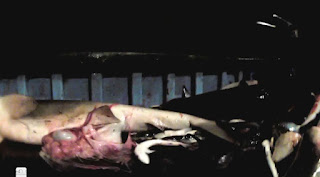
Deadly Warning from the Beaches of Peru
By Hardy Jones, Executive Director,
BlueVoice.org
The tragic mass mortality event (MME) of at least 900 dolphins along the coast of northern Peru may be a portent of what would face marine mammal populations if seismic exploration for oil were permitted off the east coast of the United States.
See video http://bluevoice.org/webfilms_catastropheperu.php
The MME was investigated in a perfunctory manner by the government of Peru (GOP). Government agencies were reluctant to brave the remote beaches north of the fishing village of San Jose – the so-called stranding zone. There may have been some political concerns about offending the oil and fishing industries. And there is no funding in Peru for coordinated interdisciplinary investigations, as there is in the United States, when an MME is declared.
Whatever the reason, the GOP issued a statement concluding that “natural causes” and “evolutionary forces” were to blame for the massive die-off of dolphins. That statement is clearly ludicrous.
I believe there is enough circumstantial evidence to state that a plausible cause of the death of the dolphins along the coast of Peru would be seismic exploration for oil that was being carried out in the area of the MME. The extremely loud sounds generated by detonation of powerful air guns can cause dolphins feeding at depth to race to the surface. If they surface too rapidly, bubbles develop in their tissues causing death. This recognized phenomenon is called acoustical trauma, rapid ascent decompression syndrome. It leads to decompression sickness, commonly called the bends.
Scientists once thought marine mammals such as whales and dolphins were not subject to decompression sickness because they do not breathe compressed air. But a recent study in the Proceedings of the Royal Society1 said researchers had recorded deaths among marine mammals as a result of decompression sickness, primarily among beaked whales “in association with anthropogenic activities such as military sonar or seismic surveys.”2
My conclusion comes after months of investigation, including an 85-mile drive along the sands of northern Peru and email exchanges with top experts in marine mammal rescue and previous MMEs.
As the investigation into the cause of the Peru dolphin MME continues, The Obama administration is proposing to open vast offshore tracts between Florida and Delaware to seismic surveys for potential oil deposits. The oil industry has applied to Minerals Management Service (MMS) and The Bureau of Ocean Energy Management (BOEM) to run hundreds of thousands of miles of air gun surveys off the east coast over the next eight years. The Obama administration estimates these detonations would injure up to 138,500 marine mammals.
My investigations in Peru gave me a horrific view of the possible results of what may have been seismic testing that was being conducted in areas frequented by thousands of common dolphins. To give some background; beginning in February 2012 hundreds of dolphins were reported stranded (dead) on the beaches of northern Peru. In March I joined Dr. Carlos Yaipen Llanos of the Peruvian Organización CientÃfica para Conservación de Animales Acuaticos (ORCA). During a single 85-mile drive along the beaches in the stranding zone, we counted 615 dead dolphins. Most were long beaked common dolphins. A few were Burmeister’s porpoise.
Dr. Yaipen Llanos, funded in large measure by BlueVoice, collected tissue samples from thirty dolphins. He conducted necropsies in situ and in Lima. After extensive testing he was able to rule out possible causal factors:
-The dolphins were not killed by fisheries interaction. -Their bodies were unscarred as they would be if they had died from net entanglement.
-There was no evidence of red tide and no species other than the two mentioned were affected.
-A contemporaneous mass mortality of pelicans was the result of starvation when their prey moved into deeper waters due to the end of a La Nina. There is no connection to the dolphin mortality.
-The deceased dolphins were well fed and healthy in appearance. A female, very recently stranded, had milk in her mammary glands.
-Morbilla virus, related to distemper, and Brucella bacteria, two pathogens commonly associated with mass mortality events, were ruled out by Dr. Yaipen Llanos. No symptoms of these diseases were found.
The Peruvian government report concurred in finding none of the above-mentioned factors complicit in the deaths of the dolphins.
What is not known, because it was not measured, is whether the dolphins suffered exposure to a huge quantity of either heavy metals or organic pollutants.
Based on the necropsies of 30 dolphins (the GOP had only three organs from two dolphins), Dr. Yaipen Llanos concluded that acoustical trauma leading to rapid ascent and decompression syndrome was the cause of death of the dolphins.
Dr. Yaipen-Llanos stated to me that necropsies that he and his colleagues performed on three separate expeditions to the stranding area showed the dolphins investigated had bleeding in their middle ears and had suffered fracture to the periotic bones that surround the inner ear. He also found gas in their internal organs and acute pulmonary emphysema, symptoms all consistent with death from decompression sickness.
Dr. Yaipen Llanos found newly stranded animals on each of ORCA’s three expeditions, showing the death of the dolphins was an ongoing process. He issued a statement saying “we believe that a strong source of sound was continuously emitted in the area. This didn’t happen just once.” He specifically did not name seismic testing as a cause, stating it was outside his professional competence.
During the course of my research I found widespread resistance from highly qualified experts to the idea that acoustical trauma was the cause of the dolphin mass mortality. NB: None of these scientists had been on scene and had gathered what little information they had from the GOP. The GOP dismissed the acoustical trauma hypothesis outright. Dr. Joseph Geraci3 told me “there is no scientifically verified case of seismic testing ever causing a mass mortality event.”
Dr. Robert Brownell of the National Oceanic and Atmospheric Administration (NOAA) of the U.S.A also discounts the acoustical trauma theory, though he says he needs much more information before coming to a solid conclusion. But he also told me of “a mass stranding of melon-headed whales off northern Madagascar about June 2008 – (a major oil company) was working in region at the time.” He went on to say “a group of us has been trying to organize (a) workshop but (it’s) difficult with government of Madagascar (not cooperating). The possibility of a mass stranding in Madagascar caused by seismic testing does not refute Dr. Geraci’s statement in which he emphasizes the words “scientifically verifiable.” Since Madagascar won’t allow an investigation there will likely never be a “scientifically verifiable” cause of death assigned.
Dr. Brownell, Dr. Frances Gulland of the Marine Mammal Stranding Center near Sausalito, California and a number of other prominent experts on MMEs are hoping to put together a conference in Peru – perhaps in the fall of 2012.
In the meantime arguments go back and forth:
GOP: Dolphins began dieing in January and the seismic tests didn’t start until February
El Commercio, Peru’s most widely read newspaper, reported that the Peruvian Navy Had given permission for foreign oil companies to carry out seismic testing as early as November.
Various scientists: The bubbles described by Dr. Yaipen Llanos could have been the result of putrefaction in the dolphin corpse.
Dr. Yaipen Llanos: the fresh dolphin carcasses he examined had excess bubbles that differed from putrefaction bubbles.
And again, there is the GOPs conclusion that the MME was caused by natural causes and evolution.
No rebuttal required but laughter.
There will likely be no universally agreed upon conclusion on what killed more than 900 dolphins along the coast of Peru. The most plausible cause, the one that has not been disqualified, is seismic testing for oil. At very least this possibility needs to be factored into decisions on permitting this form of testing in the future.
Tuesday, April 10, 2012
In the Land of Dr. No
As the day wore on the tide moved up the beach pushing us closer and closer to the dunes. Finally we were driving through the surf and I felt that we had accomplished our mission. We had counted 615 dead dolphins and had evidence of the tragedy and necropsy samples that might shed light on what had produced this catastrophe.
We found an opening in the dunes and headed east toward the Pan American Highway. Initially we passed through an area behind the dunes that was flooded when the sea was high enough to crest the dunes. But it was now dry and reasonably hard. We made good time.
Our little fellowship consisted of Carlos and me, a driver, a tall female Dutch student and two female Peruvian members of ORCA-Peru. It was pretty cramped. A dangerous lot if I’ve ever seen one.
We then entered an area of powdery sand blown up into ridges that shaped just like waves. We’d go over the top of a crest then plunge into the trough. Hints of previous traffic were everywhere but no clear road to the Pan Am.
Eventually we found ourselves perched over a vast open pit mine. Massive trucks and earthmovers gouged the earth for phosphate. We made our way down tracks in the desert, occasionally stopping to ask guards in variously colored hard hats for directions. They looked surprised but pointed east.
Eventually we reached a huge conveyer belt and then saw the exit gate, which was open. As we approached it men in various colors of overalls and hard hats came running toward us. The gate was closed in front of us. We were in the land of Dr. No.
They asked for our IDs. Strutted around. Wrote on their clipboards. Carlos laughed saying “They’re so screwed because they’ve allowed a breach in security.” I thought, “They’re nuts to write this down. They should just pass us through and hope no one knows we got through their lines.”
Finally they let us out and we ran back to Chiclayo.
What were they afraid of; that we’d steal their phosphate? Or was there something in the mining process that was running into the sea. There was that one huge pipe running through the desert. The words “something evil this way comes,” ran through my mind.
Wednesday, April 4, 2012
Catastrophic Die-off of Dolphins Along Peru Coast

During February of this year there had been rumors of as many as 260 dolphins dead on the north coast of Peru. But some authorities dismissed the report. I backed off the story. But on March 23rd I received an email from Dr. Carlos Yaipen Llanos, Lima-based director of the marine mammal rescue organization, ORCA Peru, stating there had been approximately one thousand dolphins stranded along the north coast of Peru. Lest there be any doubt, stranded means dead in virtually all cases.
For a night I stared at the ceiling. What was the truth of what was happening along that bleak, desert coast, one of the most abundant fisheries in the world and mating and feeding habitat for huge numbers of dolphins, sea lions and birds? If the numbers were even close to accurate this would be among the greatest dolphin mortality events ever recorded. I called Dr. Yaipen. He had a man on the ground north of Chiclayo who confirmed large numbers of dolphins stranded along 200 kilometers of the coast.
I immediately packed my bags and booked a Delta flight for Lima the following day. Carlos met me at the airport. Our 6:25am flight to Chiclayo was cancelled due to Lima’s pea soup fog so we grabbed an overnight bus. We linked up with three young ORCA women who had done some scouting for Carlos. They confirmed dead dolphins on nearby beaches but had traveled only a few miles.
At 11am we packed into a four wheel drive Toyota pickup with a back seat cab and drove through San Jose to the beach, cranked a right turn and headed north at low tide on a beach that was mostly firm. Our goal was to find the thousand beached dolphins reported and were told the greatest concentration was three hours drive north. That was our goal and we determined we would not stop for anything else.
Within a few hundred yards we began to see dead dolphins. In ones and twos, then Carlos saw a Burmeister’s Porpoise. Some were highly decomposed while others were in the surfline freshly stranded. All were dead.
Carlos and his team performed necropsies on a couple of the dolphins. Seeing a new born common dolphin, umbilicus still attached was wrenching.
We raced along the hard sand at the edge of the surfline crying out when we saw a dead dolphin. At first they came every couple minutes. But then we’d hit intervals when the cries would go “dolphin! Delphin! Otro! Dos mas! There’s another one up by the dune.”
When I asked for a total from Carlos’ s assistant I was stunned to hear we’d counted over 200 dolphins. We hit a length of beach no more than 100 yards long in which we found ten dolphins of varying levels of decomposition.
The numbers continued to mount. By the time the rising tide forced us off the beach the count had reached 615, counted over 135 kilometers.
Dr. Yaipen Llanos and I had known each other for some four years. We’d become involved in a study of Peruvian fishermen who eat dolphin meat. While illegal, this is commonly done and the authorities do not have the resources to prevent it. But Dr. Yaipen Llanos had discovered something important. The fishermen who ate dolphin meat regularly had a disproportionately elevated incidence of diabetes. I had found diabetes in Taiji, Japan in two men who ate dolphin meat; not in itself significant but these were men who had no other symptoms. Both were lean, didn’t eat sugar. What they did eat was dolphin meat and a certain fish that is known to have high levels of endocrine disrupting chemicals – chemicals that also disrupt the way the human body utilizes insulin.
Read my blog on the connection between eating dolphin meat and diabetes immediately below.
Saturday, March 31, 2012
Eating Dolphin Meat Linked to Diabetes Epidemic in Peru

Dr. Yaipen Llanos Necropsies Dolphin
By Hardy Jones, Executive Director, BlueVoice.org
After a day counting hundreds of dead dolphins along the Peruvian coast north of San Jose, I was not prepared for another shock of equal magnitude. The following I drove from Chiclayo to the coastal fishing village of San Jose with Dr. Carlos Yaipen Llanos of the Peruvian-based marine mammal rescue organization ORCA. Our purpose was to further document his recent discovery of the existence of an epidemic of diabetes among citizens of the fishing villages of coastal Peru.
It has long been known that Persistent Organic Pollutants (POPs) are estrogen-imitators and endocrine disruptors. More recently it has been shown that in humans a high body burden of these chemicals causes insulin resistance and can lead to diabetes and obesity.
Dr. Yaipen Llanos has found that diabetes appears especially prevalent among those who eat the meat of dolphins. It is illegal to hunt dolphins in Peru but it is done with impunity and the practice appears to be growing.
We parked along the beachfront and walked toward a chaotic scene of scores of moderate sized boats lying on the beach or in the process of being dragged by huge tractors into the water. The town has no docking facilities. All over the beach small clusters of villagers, some appearing to be recent arrivals from the mountains, gathered around buckets brimming with sleek, silvery bonito. The fish were being washed, gutted and sold on the spot to eager women who, once they had their fish, took off at a fast walk for home; their faces beaming with smile.
Overall the scene was grim – something out of Mad Max; Huge trucks and tractors belching smoke, turning, backing, hooking to a boat and hauling it well into the surf then returning for another.
Three members of Carlo’s team fanned out over the city conducting interviews about diet and any knowledge of diabetes among family or acquaintances. The number of positive responses was staggeringly high.
Carlos and I went hunting for vendors of dolphin meat but found none, not surprising as the practice is illegal and we are obvious outsiders. But children on the beach told us it was common to sell dolphin meat. The way it is done is horrific. The dolphins are netted offshore and brought to shore alive, then bludgeoned to death. Eventually they are butchered and the meat sold. The thought is so disturbing that I fight to keep it out of my mind. I have competing horrors in my psyche, each struggling to get to consciousness.
A short walk down the beach led us to the butchered carcass of a dolphin – probably a long beaked common dolphin.
Carlos and I took a short break for lunch. We ordered friend fish and rice with yellow beans. We force fed ourselves water to keep hydrated. As we ate I heard someone behind me say the word “diabetes” I speak Spanish pretty well but wanted Carlos to confirm. “Yup, those guys are taking about just coming from a funeral where they buried a friend who had just died from diabetes,” said Carlos. The coincidence was almost too much to believe. But on the other hand illustrated the prevalence of diabetes in the village.
We jumped back in the Toyota and drove to the village health clinic where we interviewed (name to come) the head nurse of the facility. She confirmed not only a high rate of diabetes but a rate that was spiking. She seemed very interested when I told her of the connection between consuming dolphin meat and insulin resistance. She agreed to expand and specify the questions she asked diabetic patients – not just how much carbohydrate or meat or vegetables do you eat, but how much fish? How much carbo? How much chicken? How much beef? How much dolphin meat?
This blog will continue.
Wednesday, March 28, 2012
Horrific dolphin mortality north coast of Peru

I arrived here on Tuesday 3/28. On that one day we found 615 dead dolphins on 135 kilometers of beach north of San Jose, Peru. This tragedy is unspeakable. I have never heard of this level of UME (unusual mortality event). BlueVoice is working with Dr. Carlos Yaipen Llanos of ORCA Peru. Tissue samples have been obtained and will be analyzed. This must be investigated.
We have video and stills for the media. You can reach me at hardyjones@bluevoice.org
Monday, February 13, 2012
Dolphin Dead in N. Peru but not 240

Photo of dolphin meat by Dr. Carlos Yaipen Llanos
By Dr. Carlos Yaipen-Llanos reporting to BlueVoice
I just returned last night from the stranding site. Several key findings. I traveled with the personnel of Reuters International (Press Agency) and it is going to be a press release tomorrow. I am on the paperwork for a denounce (report) to the Ecological Police of Peru too. Despite it was a one-day-round trip, it was enough to assess the situation. I will try to describe in detail our findings. Definitively, we have to go back because too many lives (both human and animals) are at stake.
1. The species affected are not bottlenose dolphins as depicted in the media, but Long beaked common dolphins (Delphinus capensis). We found adult males, females, pregnant females, juveniles and calves.
2. There were not 260+ stranded dolphins. In our survey over 100 Kms between San Jose and Morrope in Lambayeque State, we just found 17 dolphins.
3. A pod of over 150 Delphinus capensis was sighted during the survey, surfacing and feeding in coastal waters, 150+ meters inshore. So, it is a fact that the dolphins LIVE in the area and it is critical for their
breeding behaviour, that will justify the high presence of babies.
4. The stranding started last Thrusday (Feb 9th). However, at 5pm on the 11th, a juvenile dolphin stranded right in front of us (there is an online
picture of the dolphin with blood by the ear-eye).
5. I don't think this mass stranding is related to the earthquakes as stated in some media for two reasons:
a. The Delphinus capensis migrate from Costa Rica to the Central Pacific to northern Peru, to far away from the epicenter of any of the latest earthquakes (around 1000 km difference).
b. Since there are not 200+ stranded dolphins, the problematic is more "focalized" to a local issue.
6. There were no fish of any kind stranded sea animal next to the dolphins. Anchovies were reported floating in the water last week by the media and govenrment officials, but we found no evidence of fish species being affected at this point. Fishermen were fishing flying fish in the area with no problem.
7. As far as we know, the Imarpe (Institute for the Sea of Peru) took samples for analysis. However, in our survey no dolphin showed signs of necropsy or sample collection, just slaughtering from fishermen. I always
check this in the animals to have a bigger picture of what the authorities are looking for (and if they have any clue at all).
8. There was no evidence of carcass collection in 100 kms long, including within the town of San Jose were fishermen and children are in the beach covered of trash and the carcasses of death dolphins (most of them
slaughtered). There was also no evidence of ocean tide removing carcasses because we found several dolphins located far into the high tide, there since last Thrusday.
9. As you know, in January 21st this year, a previous survey performed in Colan, Piura State (300Km north of San Jose). We assessed nine baby common dolphins and a new born porpoise with acute gastric syndrome and signs of immune-suppression / toxicity, but next to them, hundreds of fish corresponding to both bentic species such as morena fish, clams and needle fish, and pelagic fish like anchovies...fish species that match the living sustrate of the common dolphin and the black porpoise. We also found large stains of oil compounds in water and sand by that time for our diagnose
was bio-accumulation under the frame of some sort of hydrocarbon flux to the sea in that area. Basically, long term pollution exposure.
10. In previous survey we collected samples of a baby porpoise for histopathology. In this survey, we collected samples from the juvenile common dolphin: Periotic bones and main organs. This dolphin was
immune-suppressed, since it has a severe infection, abscesses and signs of pox in the skin. I also sampled key tissues to discard the potential presence of viral diseases such as distemper through histopathology. I
certainly believe the common dolphin pods are suffering of long-term pollution exposition, leading them towards immune suppression symdromes that will be more evident in the forthcoming years.
11. Now Hardy, what we found in this mass stranding is that 10 of the 17 animals found dead had broken periotic bones, that is, due to acoustic impact. The source of the impact was from the right side of the pod, since hemorragic internal ear was found in the right side of the stranded animals.
12. We know that the use of dynamite is common among fishermen, and that fishermen are taking the meat of the stranded dolphins. This could be the cause of death of the animals...however, the signs do not correspond to that of explosive impact in their bodies. We talked today with people from the oil company and they say they haven't performed any seismic exploration in the area this month. However, here in Peru these companies
doesn't need to do the seismic assessment themselves.
13. ORCA has a wide registration of dolphin slaughtering in San Jose, as well as dolphin meat consumption and a high incidence of diabetes among
the human population that has dolphin meat in its diet.
It is our next step to go back to San Jose and vecinities to collect more information and samples for the pollution assessment. We can save it in
storage until the equipment is available. This is critical for both animal and human health.
Hope you find this information helpful.
Abraco,
Carlos.
**************************
Dr. Carlos Yaipen-LLanos
President - Science Director
ORCA
Organization for Research and Conservation of Aquatic Animals
Youtube: www.youtube.com/ORCAPERU
Facebook: Orca Peru
How Ocean Pollutants Lead to Obesity, Diabetes and Larger Breasts
by Hardy Jones
Women's breasts are larger than they used to be. For a while I thought it was just a change among younger women. But then it became clear to me that the same phenomenon had emerged in women of more mature ages. My weekly trip to surf a nude beach north of San Francisco clinched it.
A quick run around the Internet confirmed what my eyes were telling me. According to Britain's The Daily Mirror, no stranger to alluring photos of fetchingly undraped lassies, the average bra size in the UK is now 36C, up from 34B ten years ago. And the paper reports Marks & Spencer will stock J-cup bras for the first time. Formerly the largest cup size was a G. Similar figures are found in the United States. The average bra size has gone from 36C to 36DD over the past five years.
I realize some of the increase in breast size is intentional. Cosmetic implants are ever more popular. The contraceptive pill has been linked to increasing breast size. And larger breasts may simply be the result of the simple fact that people are eating more food and more fattening food and so carrying more overall weight than they have historically.
So why is a writer/ocean conservationist who specializes in marine mammals and ocean toxicity turning his attention to bra sizes? I'm a man and hard wired to notice such things but that's not why I'm writing about this.
The answer lies in my studies of the relationship between the super feminization of women (and feminization of men) and consumption of foods that contain estrogen-imitating chemicals. Classes of chemicals called persistent organic pollutants (POPs) mimic the effects of estrogen in the mammalian body. Some of these POPs are familiar to many -- PCBs and PBDEs, flame retardants and coolants in transformers, electric motors, computers, even baby clothing. Another, still persistent in the environment after 35 years off the U.S. and European markets, is DDT and its metabolite DDE. The more you eat of foods containing these and similar chemicals, the more of the estrogen imitating compounds are ingested, significantly altering the body's hormonal balance. POPs are lipophilic; that is to say, attracted to fat. These chemicals, that arrive via the wind and waters are stored in the fat of animals and fish.
My area of concentration has been with this phenomenon in the marine environment. POPs are bio-magnified up the food chain so that someone eating a large fish will ingest far more contamination that when eating smaller fish. The tests BlueVoice and others have done on dolphins, feeding at the apex of the oceanic food chain, show high levels of POPs in their tissues virtually worldwide with variation depending on size of prey fish and location.
The larger breast phenomenon is only the tip of this chemical iceberg. Serious illness and disruption of mammalian immune systems are additional byproducts of these chemicals. Obesity and diabetes have been directly connected to them as well. Recent studies on animals (tests I almost always oppose) show evidence of a link between POP exposure and insulin resistance syndrome, metabolic disorders that include type 2 diabetes (EHP 118:465-471; Ruzzin et al.) A highly alarming correlate is that obese and diabetic individuals have a far higher risk of getting cancer than people with lean physiques. A critical factor is that POPs are absorbed in fatty tissues. Ironically when obese persons lose weight they flood their blood and tissues with the POPs previously bound in fat. This is especially dangerous on a crash diet.
I was diagnosed in 2003 with multiple myeloma, a disease that has been linked to high levels of toxins. In 2005 I had myself tested for POPs and the levels were, in some cases, extremely high. The reason for my accumulation of these chemicals appears to be that during the late 1990s I ate large quantities of tuna and swordfish as well as other fish. In 1997 I had been diagnosed with chronic mercury poisoning. Again, best guess is the culprit was large predatory fish. The mercury levels came down within six-months of taking large fish off the menu. The POPs have half-lives of eight to 15 years and take decades to fully clear.
Today, through BlueVoice.org in collaboration with Elsa Nature Conservancy in Japan, I test dolphin meat for chemical pollutants. We virtually always find high levels of both POPs and heavy metals such as mercury. We publish these results both to educate human consumers of fish and to argue that eating dolphin meat, with the high contaminant levels, is a health hazard. We hope this will drive down demand for dolphin meat in Japan and worldwide.
It is not only the females of species that are affected. In mammals as diverse as alligators, polar bears and human beings high levels of estrogen imitating POPs correlate with decreased sperm counts, reduced volume and quality of semen, depressed levels of the male hormone testosterone, and high levels of estrogens in both males and females. Reproductive failure in mammals including humans has reached alarming levels.
The impact of these chemicals does not stop with the immediate consumer. Women who inadvertently include PCBs in their diet pass them to their children in fat rich breast milk. The role of environmental chemicals in obesity is emerging from the realm of speculation to hard science. And more studies are in the works. The Presidential Task Force on Childhood Obesity and the National Institutes of Health (NIH) Strategic Plan recently acknowledged the problem. In 2011 the NIH launched a three-year effort to fund research exploring the role of environmental chemical exposures in obesity, type 2 diabetes mellitus, and metabolic disorders.
These studies and action to reverse the conversion of the world's waterways into chemical soups cannot come too soon. In the meantime there are steps you can take: choose fish that are no larger than an average dinner plate and trim away fat. Avoid farm-raised fish. They contain high levels of POPs. Choose lean cuts of meat and trim fat. Do not cook with lard or by frying.
Follow Hardy Jones on Twitter.
Monday, January 2, 2012
The True History of Actions to Save Dolphins at Taiji

Friday, September 16, 2011
Chronology of Efforts to End Dolphin Slaughter at Taiji
by Hardy Jones
Photo by Dieter Hagmann
This posting attempts to cover only events at Taiji, deliberately omitting what occurred at Iki and Izu during the late 1970s and early 1980s. I welcome any additions or corrections by email.
Admittedly this chronology is heavy in references to BlueVoice due to the fact that I am most familiar with our work. Again, I invite additions and corrections from informed sources.
In 1980 Howard Hall and Hardy Jones, while en route to Iki Island to film a dolphin slaughter, learned of the capture of 200 melon-headed whales (actually a species of dolphin) at Taiji, Japan. They brought their cameras to Taiji and were able to effect the release of all the melon-heads.
In 1999 the massacre of a group of bottlenose dolphins at Futo came to the attention of CBS News. Hardy Jones was interviewed on the subject and seeing the ghastly footage decided to return to Japan to see what might be done to end the dolphin killing.
In 2001 Hardy met Sakae Hemmi, of Japan’s Elsa Nature Conservancy, and the two worked together at Taiji and Futo to end the dolphin killing. They returned each year, in some years accompanied by photographer Larry Curtis, during dolphin hunting season with Hardy filming and Sakae gathering data.
During the early 2000s Environmental Investigation Agency sent representatives to Taiji who were treated very roughly.
In 2002 Hardy’s film, When Dolphins Cry, premiered on National Geographic Channels worldwide. It portrayed the killing of dolphins at Taiji and the story of the conversion of Izumi Ishii from dolphin hunter to dolphin watch leader.
In 2003 representatives of Sea Shepherd went to Taiji. Two of their members cut nets holding dolphins in Hatagajiri Bay. Whether any dolphins escaped is an open question. But the act brought both international news coverage and heightened security at the killing cove.
2003 was also the first year of Ric O’Barry’s efforts to end the killing of dolphins at Taiji. He has returned to Taiji for extended periods each year since and later starred in the film The Cove.
In 2005 PBS broadcast Hardy Jones’ The Dolphin Defender, a film that included both the story of the slaughter of dolphins at Taiji and the beginning of dolphin watching at Futo.
During much of the first decade of the 2000s WDCS supported the work of BlueVoice in Japan and conducted outreach programs elsewhere in Japan to educate the Japanese public about the dolphin slaughter and the dangers of consuming mercury laden dolphin meat.
During the years 2007, 08, 09, 10 and 2011 German journalist Dieter Hagmann visited Taiji and brought back extraordinary footage of the brutality of the dolphins slaughter. His work appeared in TV-Stations: ARD, ZDF. Newspapers: SUN (British), Bild (German), Aftonbladet (Sweden), Associated Press (Japan), Zeeburg Nieuws (Netherland) Press Agencies: PRNewswire, asiaprnews, Reuters, CNW, DPA with many online publications.
Since 2006 BlueVoice, in conjunction with Elsa Nature Conservancy, has been conducting tests of dolphin meat for mercury and organic pollutants such as PCBs. Results have shown high to exceptionally high levels of these contaminants. Tests also showed extremely high levels of mercury in persons who consumed dolphin meat.
In 2007 surfing legend Dave Rastovich along with film star Hayden Pantierre paddled surf boards into Hatagajiri Bay and brought international attention to the situation at Taiji.
At roughly this time, a film crew organized by Louie Psihoyos began work on a film centered around Ric O’Barry and his crusade to stop the killing at Taiji. The result would be a documentary film named “The Cove.”
In 2008 a Japanese journalist, Hiroshi Hasegawa, received data developed by Elsa and BlueVoice that documented high levels of mercury in four dolphin-eating Taiji citizens. Hasegawa then conducted additional testing that found even higher numbers for mercury among the dolphin-eating population. The results were published in AERA, a major Japanese magazine. His article spurred the National Institute for Minamata Disease to propose testing citizens of Taiji for mercury. The tests showed that citizens of the town had very high levels of mercury but claimed they found no impact on health. That conclusion has been widely disparaged by international experts.
In 2010 the Psihoyos film, The Cove, won film festival after film festival culminating in winning an Academy Award. This film brought a tsunami of protest against the practice of killing dolphins and raised the issue around the world. Psihoyos and his cohorts have continued their efforts in Japan to end the dolphin slaughter and The Cove continues to reach audiences worldwide.
During the 2010 – 11 hunting season Sea Shepherd maintained a group of activists at Taiji known as the Cove Guardians. They provided web reporting throughout the entire period of the hunt.
In 2011 BlueVoice sponsored tests conducted by Elsa Nature Conservancy of dolphin meat from Okinawa and Taiji. The tests showed elevated levels of mercury and PCBs. The tests results have been widely disseminated in Japan.
At the beginning of the 2011 – 2012 dolphin hunting season Ric O’Barry organized a prayer vigil at Taiji and, along with associates such as Leilani Munter, provided information on the hunt during September.
Sea Shepherd Cove Guardians also returned to Taiji and are reporting from the scene.
Despite these extensive efforts the hunt and slaughter continues.
Tuesday, August 30, 2011
What Will it Take to End Japan Dolphin Slaughter?
By Hardy Jones
This is a slightly modified article I wrote last year for Huffington Post. It reflects the fact that Sea Shepherd pushed the Japanese whaling fleet out of the Antarctic during the 2010-11 season. But the principal issues are the same this year as last.
The dolphin hunt begins at the end of this week. Perhaps 100 police, coast guard and god knows what other form of policing will be present to greet the ever growing crowds of dolphin activists drawn to the scene of the killing.
On September 1st the dolphin hunts in Taiji, Japan are scheduled to resume despite unrelenting tsunamis of publicity around the world highlighting this brutal slaughter. In addition the village of Futo, just southeast of Tokyo, has announced it will resume dolphin hunts, mainly to secure dolphins for captivity. Dolphin hunting in Japan continues uninterrupted. NB: This did not happen last year, primarily due to absence of dolphins from their waters.
The resumption of the dolphin hunts followed a weekend, August 27 - 29, during which Animal Planet aired the two-hour season finale to Whale Wars, the fight by Sea Shepherd to stop whaling by Japan in the Antarctic, a two-hour presentation of The Cove, the academy award winning film by Louis Psoyhos featuring Ric O'Barry; and the premier of O'Barry's own three-part film series Blood Dolphins. This represents a media barrage of unprecedented dimension.
NB: The dolphin hunt continued through the entire 2010-11 season and was even extended.
While issues of cruelty are a highly important part of the argument against these hunts there is another compelling reason why dolphins and whales not only should not be hunted but instead demand greater protection than ever.
Growing evidence suggests that dolphins are becoming so contaminated by marine toxins that eating them constitutes a genuine threat to human health. Health officials in Denmark and the Faroe Islands have already recommended that consumption of pilot whale meat taken in the notorious "grinds" not be eaten due to high levels of contaminants in the meat.
The issue of heavy metal contamination in large predatory fish and marine mammals is becoming well known. Less widely known are the high levels of organic pollutants such as PCBs, PBDEs, DDT, and other chemicals that suppress mammalian immune systems and disrupt normal endocrine function. Some of these chemicals are known to be estrogen imitators that act to feminize men and superfeminize women; in some cases raising the percentage of females babies born over male babies significantly.
Dolphins are already severely threatened by anthropogenic forces. During the last year numerous peer-reviewed scientific papers have been published documenting a worldwide surge in incidence of diseases heretofore unknown in dolphins.
A team of researchers and veterinarians from the Marine Animal Disease Lab at the University of Florida have discovered at least fifty new viruses in dolphins, the majority of which have yet to be reported in any other marine mammal species.
Thirty new diseases have developed simultaneously worldwide resulting from what Dr. Gregory Bossart, Chief Veterinary Officer at the Georgia Aquarium, describes as profound immunosuppression leading to environmental distress syndrome resulting from chemical intoxication.
In addition, resistance to antibiotics has been found in dolphins in numerous locations around the world. Obviously antibiotics do not occur in nature. They come from people who take antibiotics and introduce them into the ecosystem through bodily elimination or simply throwing unused pills away. After they reach the watershed plankton ingest them and they bio-accumulate up the food web to concentrate in top predators such as dolphins. The dolphins then have the potential for breeding antibiotic resistant super bugs that may pass back to humans. The transmission of disease from one species to another is called zoonosis and is of great concern to the CDC. AIDS is one example of zoonotic transmission.
I first went to Japan to stop the dolphin slaughter at Iki Island in 1979. In 1980 cameraman Howard Hall and I filmed a barbaric slaughter of scores of bottlenose dolphins. Airing of the footage around the globe caused massive worldwide protest.
In that case exposure of the brutal footage of dolphins being hacked and stabbed to death essentially brought an end to the dolphin hunt at Iki. But such publicity has not produced a similar result since. NB: Dolphins are no longer found around Iki, This may be the result of changing water temperatures forcing their prey to other parts of the sea or it may be the dolphins around Iki were extinguished by the brutal hunts.
After Paul Watson and his Sea Shepherds vanquished the Japanese whaling fleet from the Southern Ocean Japan may believe it has to dig in its heels on the dolphin issue. The massive deployment of police to Taiji certainly indicates they are not backing down. I have been told by highly knowledgeable Japanese environmentalists that sticking Japan's nose in it may be making it all but impossible for Tokyo to withdraw from dolphin hunting. A proud sovereign nation cannot allow small groups of environmentalists to be seen to make it kow-tow. If Japan stopped dolphin hunting now it would appear environmentalists had forced them to back down. But the knowledge that diseases such as brucellosis and papillomavirus are being found ever more frequently in dolphins may, ironically be what forces the end of eating dolphin meat. And if that isn't enough thirteen additional RNA-based viruses that cause intestinal disease and encephalitis in humans have also recently been discovered in dolphins
It baffles me that whaling and dolphin killing can persist in the 21st century. We know so much about these magnificent animals. Whale and dolphin watching generate over US$2.1 billion per year around the world, vastly more than whale and dolphin killing.
But human self-interest on the part of entrenched bureaucratic elites is a powerful force molding individual ethics and shaping short sighted policies. So in Japan and elsewhere whaling and dolphin hunting persist.
In the light of emerging threats to the marine ecosystem, dolphins and whales in particular, the deliberate killing of these curious, intelligent, sentient animals is tragic and will only hasten the extirpation of whole populations of these magnificent sentinels of the sea.
Friday, August 26, 2011
Eyeball-to-Eyeball with a Sperm Whale pt II
By Hardy Jones
Thoughts floated through my mind, lingering for instants but, finding no certainties on which to perpetuate themselves, drifting back to wherever thoughts come from. "What does the vast computing system housed in the six-foot square skull of this animal make of me? Am I a joke? Does it find me as funny as I might a monkey scratching its ass? Surely it doesn't see me as edible? Does it have any clue that I can think too?"
But the one thought that never left my mind was, "how do I keep this animal with me?" For by now I was in love with this whale. I could not disengage my eyes from its one huge eye. I watched its every move. "Every move you make, every breath you take. . . . .". Even in open ocean swimming with a sperm whale my mind is a jukebox. It breathed every thirty seconds. I huffed and strained for enough air to keep my legs pumping. For five minutes we swam eyeball-to-eyeball, the whale using only the barest motion of its tail to gain forward momentum. I was surely in an altered state but it was not dreamlike. It was intense reality.
The great eye moved slightly forward in its socket, the left edge of the tail fluke was raised and my whale began a right turn, prelude to breaking off contact. You cannot pursue whales. If you try you will find yourself looking at a disappearing tail, some sloughed off epidermis and more than likely passing through a reddish brown cloud. So I resisted that impulse and turned left, mirroring the whale's retreat. When I looked over my shoulder the whale had turned back toward me.
Knowing I had to try to bring it to the camera I headed back towards the boat. Roc, with his huge housing, could not have moved far from it. I resented the responsibility of having to help the French crew get video of this encounter. I wanted my whale to myself to see where the encounter would go if we were left on our own.
As we approached the boat I could see Roc hanging at the surface, the glassy dome of his camera pointing at us. He was getting his video but I was going to lose my whale. Perhaps unwilling to get close to another of these strange creatures or to approach the boat, perhaps obeying a call from its mate far below, the sperm whale breathed twice, accelerated, arched forward and began to swim almost straight down. I could see it pass through the slanting golden shafts penetrating the blue of the sea. A bubble from its blowhole, a bubble from its anus and it was gone.
I don't remember swimming back to the boat but once aboard I jettisoned my dive gear and clenched my fist in triumph. Trying to share some of the experience with the French video crew I said "Incroyable! Ne c'est pas?" The director raised his shoulders and twisted his face performing that characteristic Gallic shrug and lit a cigarette.
To me to be uninspired by a sperm whale is a tragedy. Soon I will write about the joke I played on the French film crew. I love France and the French (by and large) but occasionally their arrogance needs to be brought down a peg.
For more stories of interspecies contacts in many oceans of the world read The Voice of the Dolphins by Hardy Jones, available in print and Kindle at Amazon.com
Subscribe to:
Posts (Atom)